

First Visit
Patient Forms
Foods to Avoid
With braces, it’s important to steer clear of hard, sticky, and sugary foods. Hard items can damage or break your wires and brackets, sticky foods tend to get lodged in and around them, and frequent sugar consumption puts your teeth at risk for decay and related issues.
Sticky Foods to Avoid:
- Gum (sugar-free or regular)
- Licorice
- Sugar Daddies
- Toffee
- Tootsie Rolls
- Caramels
- Starburst
Hard Foods to Avoid:
- Ice
- Nuts
- Hard taco shells
- French bread crust/rolls
- Corn on the cob
- Apples and carrots (unless cut into small pieces)
- Bagels
- Chips
- Jolly Ranchers
- Pizza crust
- Uncooked carrots (unless cut)
Limit Sugary Foods Such As:
- Cake
- Ice Cream
- Cookies
- Pie
- Candy
Limit to Once Daily:
- Soda
- Sweetened tea
- Gatorade
- Kool-Aid
- Other sugary drinks
We also encourage patients to break habits like biting your nails, chewing on pens or pencils, or putting other objects in your mouth — all of which can damage your braces. Check your braces regularly for any loose or bent wires and brackets. If something is broken or loose, contact our office right away to schedule a repair.
Brushing & Flossing
Proper brushing and flossing while wearing braces is essential — but the right technique matters. When it comes to choosing a toothbrush, both a soft-bristle brush and a bi-level style (with shorter bristles in the center and longer ones around the edges) are good options. An electric toothbrush works well too, as long as it’s set to a moderate setting — just be careful that the brush head doesn’t knock against your brackets.
Brush with fluoride toothpaste at a minimum of twice per day — ideally after each meal — for at least two full minutes. Clean every surface of the tooth: the front, the back, and the biting surfaces. Pay special attention to the spots between your wires and teeth and around the gumline near your brackets, as these areas tend to trap food and plaque.
Try this step-by-step approach: Start with the outer surfaces of your teeth, holding the bristles flat against the tooth and using gentle, circular movements. When you reach the gumline, angle the brush slightly toward it (downward for bottom teeth, upward for top teeth) while continuing the same circular motion. Then move to the chewing surfaces, using a scrubbing back-and-forth stroke. Wrap up by brushing the inner surfaces of your teeth using the same circular technique you used on the outside.
Special Tools
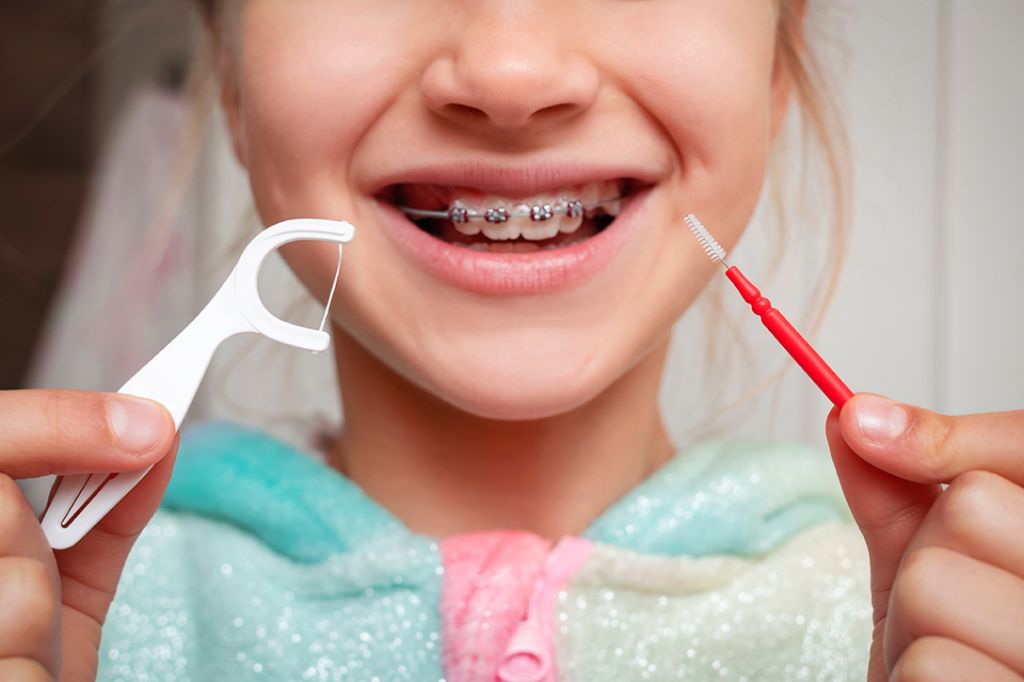
If you find it hard to clean around brackets and wires, a few specialized tools can make a real difference. The interdental brush (also called a proxabrush) features a small round cluster of bristles shaped much like a pipe cleaner. Slide it gently into the tight spaces beneath wires and around bands and brackets to clear out plaque and debris.
An oral irrigator — often called a water flosser or water pick — is another helpful option. It produces a directed stream of pressurized water that can flush food particles from areas that are difficult to reach with a brush. Keep in mind that a water flosser supplements but does not replace regular brushing and flossing; used together, these tools can significantly improve your oral hygiene.
Flossing every day is critical for gum and tooth health. The challenge with braces is getting floss beneath the archwire. A floss threader solves this: thread one end of the floss through the loop of the threader, then guide the pointed end under the archwire to pull the floss through. Once in place, work the floss up and down along both sides of each tooth, sliding it gently under the gumline until you detect that slight squeaking sensation. Remove it, and use a fresh section of floss for each tooth space.